Thursday, August 22, 2013

Short(ish) review #10

28 Days Later (2002) - "Day 1: Exposure - Day 3: Infection - Day 8: Epidemic - Day 15: Evacuation - Day 20: Devastation"

This is such an underrated movie. Yet it also one of my favourite horror movies ever. Let's be honest, there weren't that many great horror films of the 00's, with the exception of this and maybe also Pan's Labyrinth (which is more a very dark fairytale) and Let the Right One In. Oh, and Shaun of the Dead (even though that's more of a comedy).

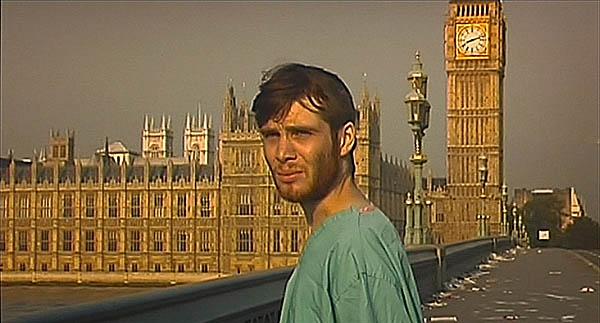
28 Days Later begins when a group of activists release a number of chimps from an animal research lab, without the knowledge that they are infected with a virus known as rage. 28 days later, a courier known as Jim (Cillian Murphy (Batman Begins, Inception and Sunshine)) wakes up from a coma in a deserted hospital and proceeds to walk through the quiet and abandoned streets of London. He is then saved from a group of infected by Selena (Naomie Harris (Skyfall)), before encountering Frank (Brendan Gleeson (The Guard and In Bruges)) and his daughter Hannah. With supplies running low, they receive a pre-recorded broadcast coming from a military blockade near Manchester, so they all decide to find it.

Danny Boyle did have some prior experience with horror films prior to this, with his first major film Shallow Grave. One of the main reasons why this is a scary is that it does seem possible, compared to some horror films which just seem implausible. What is especially creepy early on in the film is the fact that it is so quiet and empty in the streets of London. You've never seen Westminster Bridge or Piccadilly Circus like this. It's eerie. The only possible way to achieve this was to close of certain sections of street for a few minutes whilst filming. Naturally, this pissed off commuters, even though they shot it at around four in the morning. It was similar to the shots on the motorway, with police slowing down traffic in both directions.
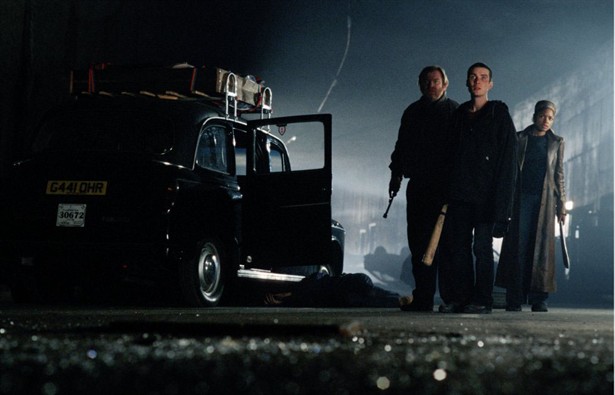
The film is mostly shot using DV (mostly Canon XL1 cameras), due to their smallness and manoeuvrability compared to a traditional film camera. It does also add a harshness to the look, which mirrors the post-apocalyptic landscape of London. Danny Boyle mentioned in the production notes that he wanted to shoot it as though they we survivors as well. It almost meant, logistically, they could set up easily and not was much time. This is the kind of thing that would make you want to go and make your own small budget horror film, because this film had a budget of £5million. That's almost the equivalent that a summer blockbuster spends to put it into 3D. OK, maybe I'm exaggerating.

This is different from most other zombie films. In films like Dawn of the Dead, zombies were slow dumb creatures, whereas in this they are fast-moving and smart. Oh, hang on. They're not actually zombies, because they aren't actually dead. In order for you to become a zombie, you have to come back from the dead. That's why they're simply known as the infected. The viral contraction is instantaneous, unlike other zombie films. It does not affect them physically; it's psychological.

I love the vast majority of Danny Boyle's films. Trainspotting is his masterpiece in my opinion and you also have Shallow Grave, Sunshine, Slumdog Millionaire which I kinda have soft spot for, 127 Hours and Trance. When I reviewed 127 Hours, I was hoping that he would not make a mess of the London 2012 opening ceremony and it's safe to say that he didn't. Sunshine is a very underrated film which is surprisingly good. However, too few people saw it and I think the main reason was that it opened in cinemas on what was the hottest day of the year. Trance had the look of a film made by someone who can do whatever he wants now, after the success of the Olympic opening ceremony. I wrote a review of it for my student newspaper at university. Click here if you wish to read it. His filmography shows his versatility and that he direct any genre of film.

After the success of this film, there was a sequel, 28 Weeks Later, where the American have intervened are attempting to revitalise Britain. Danny Boyle chose not to direct it, but was an executive producer. It's OK, but it was never going to be as good as 28 Days Later. There are lots of comparisons to John Wyndham's The Day of the Triffids, which was the inspiration for screenwriter Alex Garland. There are also three alternative ending which I haven't seen. However, the ending they do use, I think is good enough.

In short, 28 Days Later is a revolutionary horror film, one that can be held in high regard. It was both a commercial and critical success and should be seen by everyone, even if you have no interest in horror...

Wednesday, August 14, 2013

Short(ish) review #9

Zero Dark Thirty (2012) - "The greatest manhunt in history."

During the run-up to the Academy Awards each year, there always seems to be a smear campaign again one of the nominees for Best Picture. For example, in 2012 the actress Kim Novak accused The Artist of "physically assaulting" her for including Bernard Hermann's score for Vertigo. There was also the case that John Nash who was portrayed by Russell Crowe in A Beautiful Mind was an anti-Semite. Well, in 2013 many turned on this film.

Zero Dark Thirty chronicles the decade long hunt for Osama bin Laden, beginning with the events of 9/11 and concluding with the raid on the compound where he was discovered on 2nd May 2011. At the centre of it is Maya (Jessica Chastain (The Help)), an operative for the CIA who firstly witnesses the torturing of members of al-Qaeda and then becomes obsessed with the hunt for bin Laden. She concentrates most of her efforts on finding a man believed to be bin Laden's courier and that will be the key to locating the man himself.

It is directed by Kathryn Bigelow, who had previously won the Oscars for Best Director and Best Picture for The Hurt Locker. The film was originally going to be about the failed hunt for Osama bin Laden, during the American movement into Tora Bora when he escaped into Pakistan. Bigelow and screenwriter Mark Boal were just done writing the script and about to start filming when the events of May 2nd 2011 occurred. Boal went to Washington to report on how complicated the search for bin Laden was and that became the main emphasis of the film. Does Bigelow make a feminist point by making the lead character and protagonist a woman? Maybe, but it also highlights the importance and roles of woman in the CIA, as well as their part in finding bin Laden.

It does offer consideration into the realism of the film, as members of the CIA have spoken publicly about how the film is inspired by true events, but at the same time is very fictional. It begins with recorded messages of people caught up in the events of 9/11. There are also references to July 7th bombings in London in 2005, the 2008 Marriott Hotel bombing in Islamabad and the Camp Chapman attack in 2009. The name itself is a military meaning 12:30 AM. There was such a level of secrecy surrounding this film. It is also a very dark film, as the darkness descends on the atmosphere of the film, especially for the last 30 minutes (you may have to turn off all the lights and close the curtains at this point).

Part of the controversy surrounding this film was the notion that it glorified torture. The torture scenes take place early in the film and are shown to produce results. This includes practices such as waterboarding. These techniques were for a long time kept secret by the Bush administration. One of the scene that does stand out is where Maya and a group of other CIA operatives are watching TV and Barack Obama is saying that America does not do torture; they just sit in silence and don't react to it. Social critic and feminist Naomi Wolf wrote a comment piece for the Guardian, comparing Kathryn Bigelow to Leni Riefenstahl who famously directed the Nazi propaganda film Triumph of the Will about the 1934 Nuremberg Rally. She concluded her article by saying: "Like Riefenstahl, you are a great artist. But now you will be remembered forever as torture's handmaiden." A lot of people who share similar beliefs about its "glorification" of torture may have formed an opinion without having seen it. It merely just depicts the issue. However, because of the subject matter you cannot ignore it; you have to acknowledge that they did take place. And they did not lead to the immediate capture of bin Laden. You have to remember that even though it lasts over 150 minutes, the actual hunt took 10 years.

Zero Dark Thirty had a budget of $40 million, which, compared to other films, is somewhat cheap. For obvious reasons, they could not use the exact locations in the film, so it was filmed in Jordan and Chandigarh, India (despite protests from local). Jessica Chastain gives a very good performance, which earned her an Oscar nomination. There are also good performances from other members of the casts, especially Mark Strong. The only thing I was unsure about with this film was the cameo from John Barrowman. Believe me, you will watch it and go "Eh, what's he doing there?"

This is a tense, gripping film about a story people loosely know what happens, but going into further detail, letting know to the full extent what happened. However, it is ultimately up to you as to whether it does glorify torture. For me, it doesn't...

Saturday, August 10, 2013

Short(ish) Review #8

Die Hard (1988) - "Twelve terrorists. One cop. The odds are against John McClane... That's just the way he likes it."

My friend Nic is now satisfied that I have finally seen one of her favourite films of all time. Commonly referred to as Cowboys and Indians meets The Towering Inferno. And there is some sort of connection to Christmas.

In John McTiernan's Die Hard, John McClane (Bruce Willis (The Fifth Element and The Sixth Sense)) is a New York cop visiting his estranged wife Holly (Bonnie Bedelia) in Los Angeles. However, the building she works at is taken over by a group of terrorists led by Hans Gruber (Alan Rickman (Robin Hood: Prince of Thieves and Harry Potter series). Whilst his wife and her co-workers are held hostage, McClane must find a way to stop the terrorists, being "a fly in the ointment, a monkey in the wrench, a pain in the ass". Therefore, he attempts to take them out one-by-one, whilst working out their plan. He also tries to grab the attention of the LAPD to let them know that the building has been hijacked. However, the only cop who seems to be listening to him is flat-footed Sgt. Al Powell (Reginald Veljohnson).

Prior to this, Bruce Willis was only known for a one hit TV show and a B-movie flop. However, his performance as John McClane made him a hit. What's so appealing about him is the sense that he is just a regular average Joe, rather than the action hero you would come to expect during the 80s. All the big names at the time were either busy or uninterested. We also love McClane for his quick and witty one liners, which add an element of comedy. It is also amazing the fact that he did nearly the whole film bare foot and there is a plot device related to that later on in the film. As his often does, Alan Rickman does a great job of playing the villain. It's got to be the voice And that was his first feature film role. His performance has helped to make Hans Gruber one of the greatest movie villains of all time

Die Hard 2, released two years later, takes place at an airport in Washington D.C. and the idea behind it was basically how could the same thing happen to the same guy. In 1995, Die Hard: With A Vengeance featured a game of "Simon says..." in New York, starring Jeremy Irons as the evil mastermind. Why is it always the British actor who plays the villain? Maybe it's because we're best at it and/or Americans want to portrayed as heroes. 12 years later, in order to revive the franchise (and Bruce Willis' career), we got Live Free or Die Hard, or as we Brits sensibly and simply referred to it Die Hard 4.0. However, the critics dubbed it "Die Hard 4-point-less". And this year saw the release of A Good Day to Die Hard, set in Moscow showing the relationship between McClane and his son. This was the latest film in what was referred to as the "geri-action" genre, in which ailing action stars such as Willis, Sylvester Stallone and Arnold Schwarzenegger appear in films with lots of shooting, followed by a comment about the fact they're now old. Anyway, A Good Day to Die Hard was criticized for being too dumb, boring and stupid, whilst also was shown in a 12 certificate edit (obviously to maximise takings at the box office) before a 15 version was released on DVD.

I may have come across a bit snobby in some of my previous reviews when it comes to my choice of films. I do occasionally like a good action film and that is what the first Die Hard film is. It takes a good premise and delivers on it in a straightforward way, with clear well-defined characters. How to conclude this? Well, in true John McClane fashion, "Yippee-ki-yay, motherf*****!"

P.S. Nic, are you happy now that I have seen this film? You now have to watch The Shawshank Redemption...