Tuesday, December 31, 2013

My Top 10 Films of 2013

This is the first time I have ever done a top 10 films of the year review, probably because this year I've seen more than 10 films in a cinema that I liked. This is films released in UK cinemas in 2013, but doesn't include those released during "award season" at the beginning of the year, such as Zero Dark Thirty and Django Unchained (both of which I did like).

Honourable mentions - Prisoners, Iron Man 3, Star Trek Into Darkness, Thor: The Dark World (ta-da)

10. Alan Partridge: Alpha Papa
“The biggest thing to come out of Norwich since Lord Nelson or Trisha.”
North Norfolk Digital has been taken over and the new owners are looking to see which members of staff to get rid of. However, one such member takes everybody hostage. There is only person he is willing to speak to - Alan Partridge.
I wasn't that much of an Alan Partridge fan before I saw the film. I did go into the cinema with an open mind, not knowing what to expect. Quite simply it passes the 5-laugh test easily and very early on as well. It is very quotable and has set the mark for future British TV comedies that want to become films. It stays true to its roots, something that most others haven't, which makes it work well. Well doneespecially to Steve Coogan and Armando Iannucci.

9. A Field in England
From director Ben Wheatley (Kill List and Sightseers), A Field in England is a monochromatic drama set during the English Civil War. A group of escaping soldiers are taken hostage by a madman who forces them to search for buried treasure in a field. Instead they find psychedelic mushrooms.
This film made the news due to the fact it was being released simultaneously in art-house cinemas, on DVD, online and uninterrupted on Film 4. It certainly caught my attention in that respect. Simultaneous release is the future of cinema hopefully. This is very original, compelling piece of filmmaking, even if it out-paces it audience.
However, the slow motion shot of Reece Shearsmith walking out of a tent with a rope around his neck is one of the creepiest and strangest scenes I saw on screen this year.

8. Filth
This was the second film I saw James McAvoy in a leading role this year (the other I will mention later); his performance in this is amazing. He makes the character of Bruce Robertson so unlikable, yet you want to spend more time with him. You want to see him bring himself down and his addiction get the better of him. He is on screen in pretty much every shot of the film. Unfortunately, he won't get a nod from the Academy Awards, but surely the BAFTAs are more likely to recognize his performance.
This is the best adaptation of an Irvine Welch novel since Trainspotting, which is high praise considering he is not the most cinematic of writers. This is a bold attempt to adapt this novel. Some say it is a hard film to like, especially that it is such a black comedy and there is not the same affection for the character as there was in Trainspotting. Still, there is much to admire. Plus, there is a David Soul cameo and a brilliant cover of Radiohead's "Creep" on the soundtrack.
I wrote a review of this for Seren, Bangor University's student newspaper. Click here to view it.

7. Captain Phillips
As I'm sure you know, this is based on the true story of the hijacking of the Maersk Alabama by Somali pirates. However, it has recently come to light that the real-life Captain Richard Phillips was responsible for the ship being in dangerous waters, yet director Paul Greengrass (The Bourne Ultimatum and United 93) stands by its authenticity.
Never mind that. What this demonstrates is how great Tom Hanks is at documenting real-life events on film. Surely an Oscar nod for Best Actor for perhaps his best performance in years. The actors playing the pirates are brilliant as well, especially Barkhad Abdi. The suspense of it is made even more effective by the fact it is directed by Greengrass, who kept the crew and pirates apart until filming the hijack scene. It is nailbiting throughout, especially as I was unaware of the true story. It is a film that shows piracy for what it truly is, rather than the Jack Sparrow-ideology.

6. Gravity
Directed by Alfonso Cuaron (Harry Potter and the Prisoner of Azkaban), Gravity stars George Clooney and Sandra Bullock play two astronauts who survive an accident and are left adrift in space. With their oxygen running low, they need to find a way to get back home.
Visually, it is stunning, as shown in the opening shot. The quietness of space is somewhat eery. All you can here sometimes is panic and the soundtrack, rather than an explosion.You also hear the gasps from the audience. It is very much like the scene where the guy is thrown into space by HAL in 2001: A Space Odyssey. It is also a great performance by Sandra Bullock. I had thoughts originally that it was going to be the same as Meg Ryan as a helicopter pilot, but it wasn't. Hard to believe that it is only 90 minutes; if it was a James Cameron film, it would be going on and on forever.
Finally, this film is worth seeing in 3D. I never thought I would say that.

5. The World's End
I admit that I had high hopes and expectations for this film, considering that it is the final part in the Cornetto Trilogy and Shaun of the Dead is one of my favourite films ever.
20 years before, a group of friends attempt to complete the ultimate pub crawl. Now, they are back to finish what they started, but they quickly discover that things are not what they seem and not only have they changed but the town has changed.
It doesn't disappoint. It follows the same formula as Shaun of the Dead and Hot Fuzz. There is also a soundtrack very reminiscent of the early 90s, featuring Primal Scream and Inspiral Carpets. It is funny all the way through, even during some scenes where the tones of it is trying to be serious. Pegg and Forst are a great comedy duo and there are superb supporting performances from the likes of Eddie Marsan and Paddy Considine.
As Total Film put it: "Like that nugget of pure chocolate you get at the bottom of the cornet, this is a fittingly satisfying end to the Cornetto trilogy."

4. Good Vibrations
This is a heart-warming film about Terri Hooley and the Belfast punk-rock scene in the late 70s and early 80s. He discovered many local bands including Rudi and the Outcasts. However, the biggest impact he had on music in general was recording "Teenage Kicks" with The Undertones. That's why my favourite moment of the whole film is when the legendary John Peel plays the song twice on the air and you see Terri's reaction. You have to love Terri's lack of care or understanding when it comes to money. He does everything with a wing and a prayer. It is a great performance from Richard Dormer, who you will recognise from Game of Thrones, with enough charm and witt to it.
There will be some who say that this was a 2012 film. That year it premiered at the Belfast Film Festival, but was released in cinemas in March 2013.

3. Trance
OK, you've made several classic British films; you've won an Oscar for Best Director and you've coordinated the opening ceremony of the Olympics. You're allowed to do whatever you want now.
Danny Boyle's new film features all the dark stuff he wanted to include in the opening ceremony but couldn't. James McAvoy is the inside-man for the heist of a painting. However, the painting goes missing so Vincent Cassel hires a hypnotherapist played by Rosario Dawson to help McAvoy's character remember what he did to the painting by going into his mind.
Dawson's performance was the best of the three protagonists. It is a very underrated performance. This begins as a heist movie, before descending into psychological thriller. It is somewhat like Inception or Eternal Sunshine of the Spotless Mind meets Trainspotting, with a little bit of the mistrust that was in Shallow Grave. Not the best film of Danny Boyle's, but an enjoyable and thoughtful piece from on of Britain's best directors.

2. The Place Beyond The Pines
From Blue Valentine director Derek Cianfrance, there are three main stories to this film. The first is Ryan Gosling trying to make enough money for his former lover and their newborn son by robbing banks. The second is when his path crosses with a police officer played by Bradley Cooper, who himself discovers corruption within the department. The final part bring all the events together with a meeting between their two sons.
Gosling and Cooper are both fantastic in this film. I can finally take Bradley Cooper seriously and forgive him for The Hangover trilogy. Dane DeHaan is a very promising actor, who has a bright future ahead of him. It is a tale of sins of the fathers being passed onto their sons, that is almost realistic. It is a beautiful and bold piece of filmmaking.

1. Rush
As was the case with Senna, Rush shows that you do not have to be a fan of Formula 1 to appreciate a film that in reality has at its centre a battle between two mere mortals giving everything for victory. You have that here with the rivalry between James Hunt and Niki Lauda, which culminates halfway through the 1976 season with Lauda's horrific crash at the Nürbergring.
It is a return to form for director Ron Howard, who makes this spectacular both visually and audio; the on-board race sequences are amazing and the noise is almost biblical. You also have a great screenplay by Peter Morgan, someone who is great at bringing two opposing forces together, as he also did with Frost/Nixon. There are two brilliant performances from Chris Hemsworth and Daniel Brühl, his best since Good Bye, Lenin!. The look of it, its fashion and soundtrack are the epitomy of the 1970s.

Worst film of the year - honestly I try to avoid all bad films. Therefore, I'm not a good critic or judge of films. I did see The Great Gatsby and was a bit underwhelmed, maybe because I hadn't read the book. It was very loud, flash and shouty. It was not terrible though. However, if you want a worst film of the year, from what I've heard said about it, I'm pretty glad I didn't see Kick-Ass 2, considering that I really enjoyed the first film. It sounds like it's been a disappointment. Also, Movie 43, why does it exist?

Saturday, October 26, 2013

Short(ish) review #13

Shallow Grave (1994) - "What's a little murder among friends?"

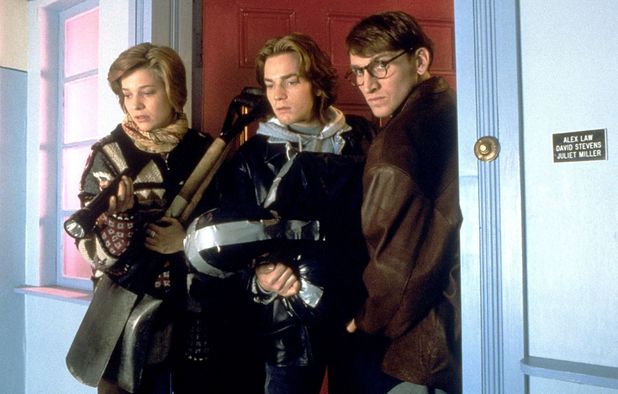
Yep, another Danny Boyle film. The guy is a legend and can do nothing wrong in this country's eyes. And this is the film that started it all. Another example of his brilliance. This was the first film he made written John Hodge and so started a great partnership between them; the next film of course was Trainspotting.

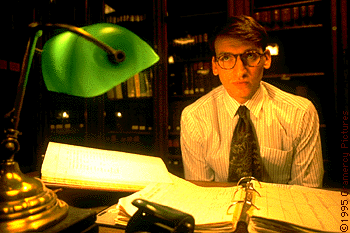
In Shallow Grave, Kerry Fox, Ewan McGregor and Christopher Eccleston play three fairly ordinary friends who are looking for a new flatmate. They agree on one tenant, played by Keith Allen, who locks himself in his room upon arrival. The three of them break into his room, only to find him lying dead on his bed. They also discover a suitcase full of money and this leaves them with a dilemma - do they hand the money into the police or do they get rid of the body and keep the money? I think you can guess what they do...

What is so effective about the film is the set up. Even though these characters are meant to be friends all living under the same roof, they are fairly unlikeable. The first example of this is when they interview the possible tenants and the way they undermine them. After that, Danny Boyle adds the element of distrust to the film, the ideas that they are all working against each other. In this respect, this notion was mirrored in Danny Boyle's 2013 film Trance. However, the audience is interested by them.

It is very dark, yet stylish at the same time. The visual look of the film is also effective. The cinematography was done by Brian Tufano, who made a name of himself with Quadrophenia. Some of the tracking shots are so effective. The lighting is worthy of note as well, especially when Christopher Eccleston is in the loft and the only light is coming through the holes in the floor. He does get some very interesting shots in what is a pretty big apartment and of course he would go to work on Trainspotting. The colour of the apartment is very chilling as well, not just because it is a very cold blue.

Shallow Grave can be regarded as being influential, especially for films like Eli Roth's Cabin Fever, in the sense that you think you know who your friends are, but you don't. The best example of that is the development of Christopher Eccleston's character. The turning point for him is [SPOILER!!!] the scene where he is basically forced to dispose of the body by himself. He has to saw its limbs off and bash its head in with a hammer. It's such a powerful scene; what Danny Boyle is demonstrating is the horror of somebody selling their soul to the devil. This is followed by the scene where two men go up into the loft and they weren't expecting to find him up there. That's all I'm saying.

Even though the characters aren't likeable, you have to admire the performances given by the cast. These performances were just the beginning for Ewan McGregor and Christopher Eccleston. This was long before they became Obi-Wan Kenobi and Doctor Who. Because of their inexperience and unknown status at the time, Kerry Fox was the bankable star of the trio; Channel 4 and the Glasgow Film Fund invested £1 million because of her and her appearance in Jane Campion's An Angel at My Table. People often forget this and she was the first to be cast.

It does also feature one of the best uses of an Andy Williams song in a film ever. Just thought you should know. Shallow Grave is not specifically a horror film, but there are those chilling elements to it that make it stand out from the rest. The suspense is what makes up for the gore and blood you would expect instead. It does have some comedy to it as well. Just remember: "I believe in friends. I believe we need them. But if one day you can't trust them any more, well, what then... What then?"

Saturday, September 28, 2013

Short(ish) review #12

The Shining (1980) - "A Masterpiece Of Modern Horror."

Every now and then, you'll meet someone who claims that they don't like or have no interest in horror films. However, they always love The Shining.

Based on the novel by Stephen King, the Torrance family are asked to mind the Overlook Hotel during the winter, with no one else there. However, the hotel is built on a Native American burial ground; many of the previous caretakers have gone mad and killed their families. As a result, the father, Jack Torrance (Jack Nicholson), becomes under the influence of an evil spiritual presence and attempts to kill his family.

When the scary moments start to happen in most horror films, you soon discover that the phones are out. In The Shining, you learn that they're out at the beginning. There's no way they can call for help. There are some shots where the hotel is given all the space in the frame and the characters look small. Its presence
and influence is steadily growing throughout the film. Within the first half of the film, at least, you keep seeing Jack's son, Danny, riding a tricycle through the hallways and the sound of him is creepy, especially when the surface keeps changing from carpet to wood. That coupled with the visions of the twin girls, sometimes standing together and others dismembered all over the place.

Also, there are certain elements to the film which remain unexplained at the end. The most notable is when Wendy Torrance (Shelley Duvall) is running down the corridor, she's looking through all these rooms and she sees one with two people in it, one of them in a bear costume. You don't want to know what they're doing if you haven't seen the film. There is also the woman in the bath sequence. That really crept me out the first time I saw it. In fact, part of me wanted to throw up, it was that disgusting. You can see to some extent that Jack Torrance is getting more mad and psychotic throughout the film and that's confirmed when Wendy looks at typewriter and all that's written are the words "All work and no play makes Jack a dull boy".

Ultimately, are these elements of horror the product of the hotel or Jack Torrance? That's up to you...

It does also offer one of cinema's most memorable quotes:


My sister hates this film. She thinks that it is boring and does not understand it. She's entitled to her opinion, which is fair. She has only seen it once though. Despite the fact this film is held in such high regard, it received no Oscar or Golden Globe nominations, but did receive two Razzie nominations in their inaugurate year. Variety magazine said "With everything to work with, [...] Kubrick has teamed with jumpy Jack Nicholson to destroy all that was so terrifying about Stephen King's bestseller." However, more recent analyses have been more favourable towards it, being won over by its slow pace.

What did Stephen King have to say about it? Well, unfortunately, he hated it. It was the only adaptation of his novels he remembered hating. Key themes were ignored, such as the dangers of alcoholism and the disintegration of the family. He also expressed the casting of Jack Nicholson as a mistake, especially giving off hints that Jack Torrance would go mad (audiences would associate Nicholson with too much with One Flew Over The Cuckoo's Nest). He would rather have casted Jon Voight, Michael Moriarty or Christopher Reeve. He also described Shelley Duvall's character as being "misogynistic", that she was emotionally unstable and only there to scream. Her performance is the opposite to what he had intended her to be. It's no hidden secret that Kubrick picked on her, losing his temper with her to get a more effective performance from her. Recently Stephen King has been speaking about his new sequel to The Shining, even though he is a bit nervous about the reception it will receive.

Here's a bit of scene recycling you may have noticed: the opening shots of Jack Nicholson driving to the hotel; outtakes of that were used for the finale of the original cut of Blade Runner (although you can't notice a small VW Beatle).

This is just a brief summary from me. If you want to know about The Shining, there is a documentary film called Room 237, which addresses the film's meanings and themes. There is of course the Simpsons Halloween special parody, where they look after a hotel for Mr Burns, who cuts off the supply of TV and beer for Homer. I do like the trailer for this film. It gives nothing away, although it does make you think: "Hmm, that's odd. Usually the blood gets off at the second floor..."


Monday, September 23, 2013

Short(ish) review #11

Sid and Nancy (1986) - "Love Kills."

The story of a troubled and doomed love relationship, filled with sex and drugs. Still, it's a better love story than Twilight. A lot of people may hate me for that comment. Well, get over it!!!

Sid and Nancy is a morbid look at the destructive relationship between Sid Vicious (Gary Oldman (The Dark Knight trilogy, Leon and Tinker Tailor Soldier Spy)) and Nancy Spungen (Chloe Webb). As you may know, Sid Vicious was the bassist in the British punk rock band the Sex Pistols. Initially he shows no interest in her, until she buys him heroin. However, their relationship causes rifts to form within the band and, as you may know, the band split up after their failed tour of America. Vicious decides to pursue an unsuccessful solo-career, but his addiction grows. One morning, Nancy is found stabbed to death in a bathroom and Sid is arrested for her murder.

In my opinion, Gary Oldman is one of the greatest and most respected actors alive at the minute. He plays such a variety of different characters, such as a psychotic corrupt police officer in Leon, the definitive portrayal of a vampire in Dracula, the man responsible for the greatest assassination in history in JFK and the calm quiet figure of George Smiley in Tinker Tailor Soldier Spy. Well, this is him at the beginning of his career. This is his breakthrough performance.

People have acknowledged that, in real life, Sid Vicious was a bit of an arse (to put it kindly). He was supposedly a terrible bass player. Vicious only performed one of the tracks on their album Never Mind the Bollocks, Here's the Sex Pistols; it was mostly former bass player Glen Matlock. They have also accused director Alex Cox of making Sid lovable and sympathetic, taking the edge off him. For example, the real-life Sid used to wear a t-shirt with a Swastika on it, whereas in the film he's wearing a hammer and sickle. Cox faced criticism from Sex Pistols lead man Johnny Rotten, mainly because he used, rather than him, Joe Strummer as a point of reference. Yep, the lead singer from the Clash. Rotten called it " mere fantasy...the Peter Pan version".

After watching this, I did go and listen to the actual version of Sid singing I Wanna Be Your Dog by The Stooges, drunk out of his head. It was either that or The X Factor and even though it sounded terrible it was better than most of the idiots who appear on that show. The film also features a scene of Vicious performing his version of Frank Sinatra's My Way in Paris (performed by Oldman).

Despite all the negative comments and softness of the film, you have to watch it simply for Gary Oldman's performance. Similarly to Christian Bale in The Machinist, Oldman lost a large amount of weight to play the role, so much that he ended up in hospital. Oldman makes Vicious understandable and this allows the audience to get inside the relationship.  I'm sure you would not have recognised it was him before reading this.

Thursday, August 22, 2013

Short(ish) review #10

28 Days Later (2002) - "Day 1: Exposure - Day 3: Infection - Day 8: Epidemic - Day 15: Evacuation - Day 20: Devastation"

This is such an underrated movie. Yet it also one of my favourite horror movies ever. Let's be honest, there weren't that many great horror films of the 00's, with the exception of this and maybe also Pan's Labyrinth (which is more a very dark fairytale) and Let the Right One In. Oh, and Shaun of the Dead (even though that's more of a comedy).

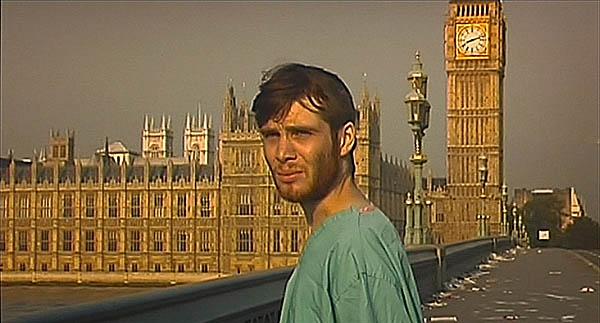
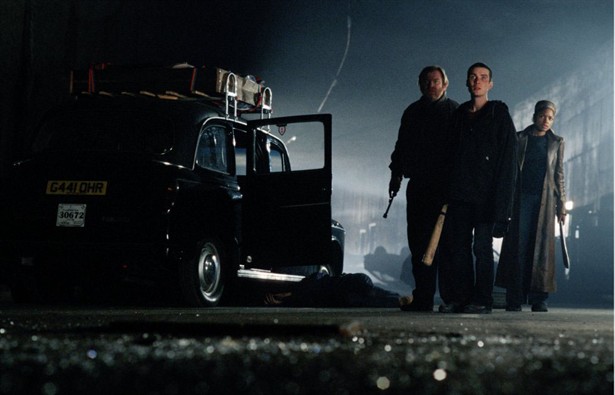
28 Days Later begins when a group of activists release a number of chimps from an animal research lab, without the knowledge that they are infected with a virus known as rage. 28 days later, a courier known as Jim (Cillian Murphy (Batman Begins, Inception and Sunshine)) wakes up from a coma in a deserted hospital and proceeds to walk through the quiet and abandoned streets of London. He is then saved from a group of infected by Selena (Naomie Harris (Skyfall)), before encountering Frank (Brendan Gleeson (The Guard and In Bruges)) and his daughter Hannah. With supplies running low, they receive a pre-recorded broadcast coming from a military blockade near Manchester, so they all decide to find it.

Danny Boyle did have some prior experience with horror films prior to this, with his first major film Shallow Grave. One of the main reasons why this is a scary is that it does seem possible, compared to some horror films which just seem implausible. What is especially creepy early on in the film is the fact that it is so quiet and empty in the streets of London. You've never seen Westminster Bridge or Piccadilly Circus like this. It's eerie. The only possible way to achieve this was to close of certain sections of street for a few minutes whilst filming. Naturally, this pissed off commuters, even though they shot it at around four in the morning. It was similar to the shots on the motorway, with police slowing down traffic in both directions.

The film is mostly shot using DV (mostly Canon XL1 cameras), due to their smallness and manoeuvrability compared to a traditional film camera. It does also add a harshness to the look, which mirrors the post-apocalyptic landscape of London. Danny Boyle mentioned in the production notes that he wanted to shoot it as though they we survivors as well. It almost meant, logistically, they could set up easily and not was much time. This is the kind of thing that would make you want to go and make your own small budget horror film, because this film had a budget of £5million. That's almost the equivalent that a summer blockbuster spends to put it into 3D. OK, maybe I'm exaggerating.

This is different from most other zombie films. In films like Dawn of the Dead, zombies were slow dumb creatures, whereas in this they are fast-moving and smart. Oh, hang on. They're not actually zombies, because they aren't actually dead. In order for you to become a zombie, you have to come back from the dead. That's why they're simply known as the infected. The viral contraction is instantaneous, unlike other zombie films. It does not affect them physically; it's psychological.

I love the vast majority of Danny Boyle's films. Trainspotting is his masterpiece in my opinion and you also have Shallow Grave, Sunshine, Slumdog Millionaire which I kinda have soft spot for, 127 Hours and Trance. When I reviewed 127 Hours, I was hoping that he would not make a mess of the London 2012 opening ceremony and it's safe to say that he didn't. Sunshine is a very underrated film which is surprisingly good. However, too few people saw it and I think the main reason was that it opened in cinemas on what was the hottest day of the year. Trance had the look of a film made by someone who can do whatever he wants now, after the success of the Olympic opening ceremony. I wrote a review of it for my student newspaper at university. Click here if you wish to read it. His filmography shows his versatility and that he direct any genre of film.

After the success of this film, there was a sequel, 28 Weeks Later, where the American have intervened are attempting to revitalise Britain. Danny Boyle chose not to direct it, but was an executive producer. It's OK, but it was never going to be as good as 28 Days Later. There are lots of comparisons to John Wyndham's The Day of the Triffids, which was the inspiration for screenwriter Alex Garland. There are also three alternative ending which I haven't seen. However, the ending they do use, I think is good enough.

In short, 28 Days Later is a revolutionary horror film, one that can be held in high regard. It was both a commercial and critical success and should be seen by everyone, even if you have no interest in horror...

Wednesday, August 14, 2013

Short(ish) review #9

Zero Dark Thirty (2012) - "The greatest manhunt in history."

During the run-up to the Academy Awards each year, there always seems to be a smear campaign again one of the nominees for Best Picture. For example, in 2012 the actress Kim Novak accused The Artist of "physically assaulting" her for including Bernard Hermann's score for Vertigo. There was also the case that John Nash who was portrayed by Russell Crowe in A Beautiful Mind was an anti-Semite. Well, in 2013 many turned on this film.

Zero Dark Thirty chronicles the decade long hunt for Osama bin Laden, beginning with the events of 9/11 and concluding with the raid on the compound where he was discovered on 2nd May 2011. At the centre of it is Maya (Jessica Chastain (The Help)), an operative for the CIA who firstly witnesses the torturing of members of al-Qaeda and then becomes obsessed with the hunt for bin Laden. She concentrates most of her efforts on finding a man believed to be bin Laden's courier and that will be the key to locating the man himself.

It is directed by Kathryn Bigelow, who had previously won the Oscars for Best Director and Best Picture for The Hurt Locker. The film was originally going to be about the failed hunt for Osama bin Laden, during the American movement into Tora Bora when he escaped into Pakistan. Bigelow and screenwriter Mark Boal were just done writing the script and about to start filming when the events of May 2nd 2011 occurred. Boal went to Washington to report on how complicated the search for bin Laden was and that became the main emphasis of the film. Does Bigelow make a feminist point by making the lead character and protagonist a woman? Maybe, but it also highlights the importance and roles of woman in the CIA, as well as their part in finding bin Laden.

It does offer consideration into the realism of the film, as members of the CIA have spoken publicly about how the film is inspired by true events, but at the same time is very fictional. It begins with recorded messages of people caught up in the events of 9/11. There are also references to July 7th bombings in London in 2005, the 2008 Marriott Hotel bombing in Islamabad and the Camp Chapman attack in 2009. The name itself is a military meaning 12:30 AM. There was such a level of secrecy surrounding this film. It is also a very dark film, as the darkness descends on the atmosphere of the film, especially for the last 30 minutes (you may have to turn off all the lights and close the curtains at this point).

Part of the controversy surrounding this film was the notion that it glorified torture. The torture scenes take place early in the film and are shown to produce results. This includes practices such as waterboarding. These techniques were for a long time kept secret by the Bush administration. One of the scene that does stand out is where Maya and a group of other CIA operatives are watching TV and Barack Obama is saying that America does not do torture; they just sit in silence and don't react to it. Social critic and feminist Naomi Wolf wrote a comment piece for the Guardian, comparing Kathryn Bigelow to Leni Riefenstahl who famously directed the Nazi propaganda film Triumph of the Will about the 1934 Nuremberg Rally. She concluded her article by saying: "Like Riefenstahl, you are a great artist. But now you will be remembered forever as torture's handmaiden." A lot of people who share similar beliefs about its "glorification" of torture may have formed an opinion without having seen it. It merely just depicts the issue. However, because of the subject matter you cannot ignore it; you have to acknowledge that they did take place. And they did not lead to the immediate capture of bin Laden. You have to remember that even though it lasts over 150 minutes, the actual hunt took 10 years.

Zero Dark Thirty had a budget of $40 million, which, compared to other films, is somewhat cheap. For obvious reasons, they could not use the exact locations in the film, so it was filmed in Jordan and Chandigarh, India (despite protests from local). Jessica Chastain gives a very good performance, which earned her an Oscar nomination. There are also good performances from other members of the casts, especially Mark Strong. The only thing I was unsure about with this film was the cameo from John Barrowman. Believe me, you will watch it and go "Eh, what's he doing there?"

This is a tense, gripping film about a story people loosely know what happens, but going into further detail, letting know to the full extent what happened. However, it is ultimately up to you as to whether it does glorify torture. For me, it doesn't...

Saturday, August 10, 2013

Short(ish) Review #8

Die Hard (1988) - "Twelve terrorists. One cop. The odds are against John McClane... That's just the way he likes it."

My friend Nic is now satisfied that I have finally seen one of her favourite films of all time. Commonly referred to as Cowboys and Indians meets The Towering Inferno. And there is some sort of connection to Christmas.

In John McTiernan's Die Hard, John McClane (Bruce Willis (The Fifth Element and The Sixth Sense)) is a New York cop visiting his estranged wife Holly (Bonnie Bedelia) in Los Angeles. However, the building she works at is taken over by a group of terrorists led by Hans Gruber (Alan Rickman (Robin Hood: Prince of Thieves and Harry Potter series). Whilst his wife and her co-workers are held hostage, McClane must find a way to stop the terrorists, being "a fly in the ointment, a monkey in the wrench, a pain in the ass". Therefore, he attempts to take them out one-by-one, whilst working out their plan. He also tries to grab the attention of the LAPD to let them know that the building has been hijacked. However, the only cop who seems to be listening to him is flat-footed Sgt. Al Powell (Reginald Veljohnson).

Prior to this, Bruce Willis was only known for a one hit TV show and a B-movie flop. However, his performance as John McClane made him a hit. What's so appealing about him is the sense that he is just a regular average Joe, rather than the action hero you would come to expect during the 80s. All the big names at the time were either busy or uninterested. We also love McClane for his quick and witty one liners, which add an element of comedy. It is also amazing the fact that he did nearly the whole film bare foot and there is a plot device related to that later on in the film. As his often does, Alan Rickman does a great job of playing the villain. It's got to be the voice And that was his first feature film role. His performance has helped to make Hans Gruber one of the greatest movie villains of all time

Die Hard 2, released two years later, takes place at an airport in Washington D.C. and the idea behind it was basically how could the same thing happen to the same guy. In 1995, Die Hard: With A Vengeance featured a game of "Simon says..." in New York, starring Jeremy Irons as the evil mastermind. Why is it always the British actor who plays the villain? Maybe it's because we're best at it and/or Americans want to portrayed as heroes. 12 years later, in order to revive the franchise (and Bruce Willis' career), we got Live Free or Die Hard, or as we Brits sensibly and simply referred to it Die Hard 4.0. However, the critics dubbed it "Die Hard 4-point-less". And this year saw the release of A Good Day to Die Hard, set in Moscow showing the relationship between McClane and his son. This was the latest film in what was referred to as the "geri-action" genre, in which ailing action stars such as Willis, Sylvester Stallone and Arnold Schwarzenegger appear in films with lots of shooting, followed by a comment about the fact they're now old. Anyway, A Good Day to Die Hard was criticized for being too dumb, boring and stupid, whilst also was shown in a 12 certificate edit (obviously to maximise takings at the box office) before a 15 version was released on DVD.

I may have come across a bit snobby in some of my previous reviews when it comes to my choice of films. I do occasionally like a good action film and that is what the first Die Hard film is. It takes a good premise and delivers on it in a straightforward way, with clear well-defined characters. How to conclude this? Well, in true John McClane fashion, "Yippee-ki-yay, motherf*****!"

P.S. Nic, are you happy now that I have seen this film? You now have to watch The Shawshank Redemption...


Tuesday, June 11, 2013

Short(ish) review #7

Alien (1979) - "In space no one can hear you scream."

Someone must have sat down in a meeting and gone "You know that film Halloween [which was released the previous year]? Let's do that...but in space..." If they said that to you, you'd think it was a gimmick and it sounds too simple. Trust me. This film is genuinely scary and shocking. It may primarily be a science-fiction film, but it's really a full-on horror film. Like many of the previous posts, this will contain plot spoilers. Therefore, if you don't want to know what happens, look away. At least watch the film first. Like the film though, you may not want to read this whilst eating your dinner.

Starring Tom Skerritt, Sigourney Weaver and John Hurt, the crew on board the Nostromo, a deep-space commercial towing vehicle on its way back to Earth, receive an SOS call from a nearby planet and so decide to investigate. They discover a derelict alien spacecraft and within it a hive colony of an unknown creature. It turns out that what appeared to be a distress call is actually a warning. One of the crew members disturbs one of the eggs and then all hell breaks loose.

This film is a journey into the unknown, as it is set in the future and in deep space, which we are yet to explore in real-life. One of the scariest aspects of the film is the sense of claustrophobia. It's all happening in such a confined space that there is nowhere for the characters to run to. If you were a character in this film, you'd want someone covering you back. (SPOILER ALERT!!!) Obviously, the most shocking, unexpected moment, that made me jump out of my seat (metaphorically), was when the alien bursts out of John Hurt's chest. It appears to be the calm after the storm as all the characters are sitting around a table, eating and discussing what happened beforehand, when the creature was attached to John Hurt's face. However, he starts behaving involuntarily and then there is blood everywhere. Supposedly, director Ridley Scott did not inform the cast about what was going to happen at that moment, so to generate a genuine reaction of revulsion and shock from them. That is one of the most mind-blowing moments in cinema history and can be ranked alongside the likes of the head exploding scene from Scanners, the decapitation scene from The Omen, the whole chest defibrillation scene in The Thing when the guy's head scurries all over the floor; the list goes on. It's not to do with violence; it's more related to surrealism.

Another frightening aspect is the actual Alien, originally designed by H. R. Giger. Its stunning visual effect led to an Academy Award. There are three main types of alien - the "facehugger", then the"chestburster" and finally the actual Alien. The facehugger is the one that attaches itself to John Hurt's face and lays the eggs inside him. The chestburster scene was shot using a fake torso, with pumps and squibs gushing blood everywhere, and a puppeteer who shoved it up through the torso with a stick. The adult Alien includes a mouth, which when it opens, rather than having a tongue, has
a second mouth, which is creepy. For most of the film, it is played by Bolaji Badejo, a 7-foot-2 Nigerian design student. However, the audience doesn't see most of the actual Alien body in full until the end. Random pieces are shown throughout, in order to raise the tension, fear and suspense.

As with all classic horror films of the 1970s, there was an Alien franchise. In 1986, there came Aliens which was co-written and directed by James Cameron. Many consider it to be as good as the original. In 1992, Alien³, directed by David Fincher, was not so good, mostly ruined by the studio. Five years later, Alien: Resurrection was nothing to write home about, although Jean-Pierre Jeunet would later go on to direct Amelie. Then, there came the attempts to match it against the Predator franchise, firstly with AVP: Alien vs. Predator and then AVPR: Aliens vs. Predator - Requiem. Both of these tried to be set in the present, not a dystopic future. FAIL. Whereas Alien had characters you were interested in and cared about, AVPR especially featured a group of teens running around in their pants. FAIL. At the end of that film, they try to tie up the timescale between it and Alien. FAIL. In 2012, there was the "unofficial" prequel Prometheus, which I thought was OK, featuring great performances from Noomi Rapace and Michael Fassbender. However, many were disappointed with it, even calling it the worst film of the year. That's a bit harsh.

It is not a fast-paced film, well at least the first half isn't. It very thoughtful and credit there has to go to the writers. It features characters that you care about and fear for their safety. In terms of acting, this is the most acknowledged performance by Sigourney Weaver. She became a pin-up and icon for cinema-goers overnight (mainly for her gutsy survival and not just for the sight of her in her underpants). Still, if you are planning on going into space at any point in the future, this might not be the film to watch the night before the launch...

Wednesday, March 20, 2013

Short(ish) review #6

Butch Cassidy and the Sundance Kid (1969) - "You never met a pair like Butch and The Kid."

These two were two of the most infamous outlaws of all time, but this film portrays them in a much different light. We now feel sorry for them.

Butch Cassidy (Paul Newman (The Sting and Slap Shot)) and the Sundance Kid (Robert Redford (The Sting and All the President's Men)) are members of the Hole in the Wall Gang, who are famous for their robberies. However, when attempting to rob a train, the owner of the Union Pacific hires a group of lawmen to track down Butch and Sundance and kill them. After they finally lose them, Butch convinces Sundance and his lover Etta Place (Katherine Ross (The Graduate)) to escape and start a new life in Bolivia. However, the law soon catches up with them there.

The three main actors give three solid performances. I do really like Katherine Ross in the film; she is perhaps one of the most glamorous actresses of all time. Apart from her looks, she is smart in this film and she is resigned to the fact that these two men have influenced her life in so many ways. Paul Newman is once again playing the lovable rogue, as I said previously when I reviewed Slap Shot and in many of his previous films. If he wasn't playing Butch Cassidy, it could have been Dustin Hoffman or Marlon Brando.

This film won 4 Academy Awards and was nominated for another 3. It missed out on Best Picture to Midnight Cowboy, but it beat Midnight Cowboy for Best Music and Best Song. The music was composed by Burt Bacharach, featuring B.J. Thomas' performance of Raindrops Keep Fallin' on my Head, which featured in the iconic bicycle scene.


In terms of others awards, in 1971 the film won (what was at the time, but I'm unsure whether it still is) a record 9 BAFTA awards, including Best Actor for Robert Redford, Best Actress for Katherine Ross, Best Direction and Best Film.

There are also some memorable quotes/one-liners from the film, which add a comedic element to it. One of them features in another iconic scene where Butch and Sundance are trapped on a cliff face, trying to escape their pursuers. Butch wants them to jump into the river bellow, whereas Sundance wants to fight:

Butch Cassidy: Alright. I'll jump first.
Sundance Kid: No.
Butch Cassidy: Then you jump first.
Sundance Kid: No, I said.
Butch Cassidy: What's the matter with you?
Sundance Kid: I can't swim!
Butch Cassidy: (Laughing) Are you crazy? The fall will probably kill you.


The reason this is funny is you wouldn't expect Sundance to say this. He'd much rather fight and get shot than drown. Later in the film, the roles reverse when they are confronted by a group of bandits in Bolivia:

Butch Cassidy: Kid, there's something I ought to tell you. I never shot anybody before.
Sundance Kid: One hell of a time to tell me!


I love the numerous attempts to rob a bank in Bolivia; the first time, no one understands a word they say; the second time, in an attempt to learn Spanish, they end up using cue cards and still muck it up.

This film continued a long run of western style films, which had dominated the 1960s. Earlier in that decade there was The Magnificent Seven, then along came Sergio Leone with A Fistful of Dollars, For a Few Dollars More, The Good, The Bad and The Ugly and Once Upon a Time in the West. This is less of a wild west film compared to the others, I'd say. However, it's more of a feel good film, whereas the others are much more serious. Butch Cassidy and the Sundance Kid are more uplifting. Part of the film's legacy includes the Sundance Film Festival, which was founded by Robert Redford.

Wednesday, January 9, 2013

Short(ish) review #5

Thank You for Smoking (2005) - "Don't hide the truth. Just filter it."

This was the one film I wanted more than any for Christmas, believe it or not. Not a Die Hard box set or a blu-ray copy of Prometheus. This. And it didn't disappoint. Before I start, can I say this isn't a pro-smoking film; it's just looking for the lighter side of an issue that is so prominent in society nowadays.

Nick Naylor (Aaron Eckhart (The Dark Knight)) is a lobbyist for the tobacco industry in America, an industry that kills 1,200 people a day. He is part of a group of friends who call themselves the MOD - Merchants of Death. He is asked by his boss for a way to try to combat anti-smoking campaigns, so he decides that there should be more smoking in movies to encourage more sales. However, Nick is also a divorced father and he has to try to be a good enough role model for his son. However, his ex-wife is concerned about the lack of time he is spending with him, let alone the impact his job might have on him.

One thing that grabbed my attention to this film was the fact it was directed by Jason Reitman. This was actually his first full length feature film as a director, but he is better known for directing the film after this one - Juno. I like Juno and it's clear to see how he used Thank You for Smoking as a stepping stone towards it. Reitman comes up with some great pieces of dialogue, adapting the novel by Christopher Buckley. It is funny. It easily passes the 5-laugh test. I perhaps laughed more during this film that most films which claim to be comedies. The reason it's funny is that you would be morally outraged if you heard most of what is said in this film in the real world.

It is a fantastic performance by Aaron Eckhart, as a character who has an unenviable job - defending the indefensible. Proof of this is the opening scene when he is appearing on a chat show, alongside a health advocate and a teenager suffering from cancer. He turns it on its head by asking how would he profit out of the loss of the teenager - "It's in our best interests to keep Robyn alive and smoking." There is also a great performance from J.K Simmons as Nick's boss BR. It is reminiscent of his role in Spider-Man, as the guy in charge who stands around shouting his heading off. Cameron Bright also gives a good performance as Joey, Nick's son. Other notable cast members include Maria Bello, Katie Holmes, Rob Lowe, William H. Macy and Robert Duvall.

Even though this is a film about smoking, there is surprisingly very little smoking shown in the film. There is one thing to learn from this film. No, it isn't that we should all take up smoking, because that's just wrong. We can all learn about the beauty of argument - "if you argue correctly, you're never wrong."